

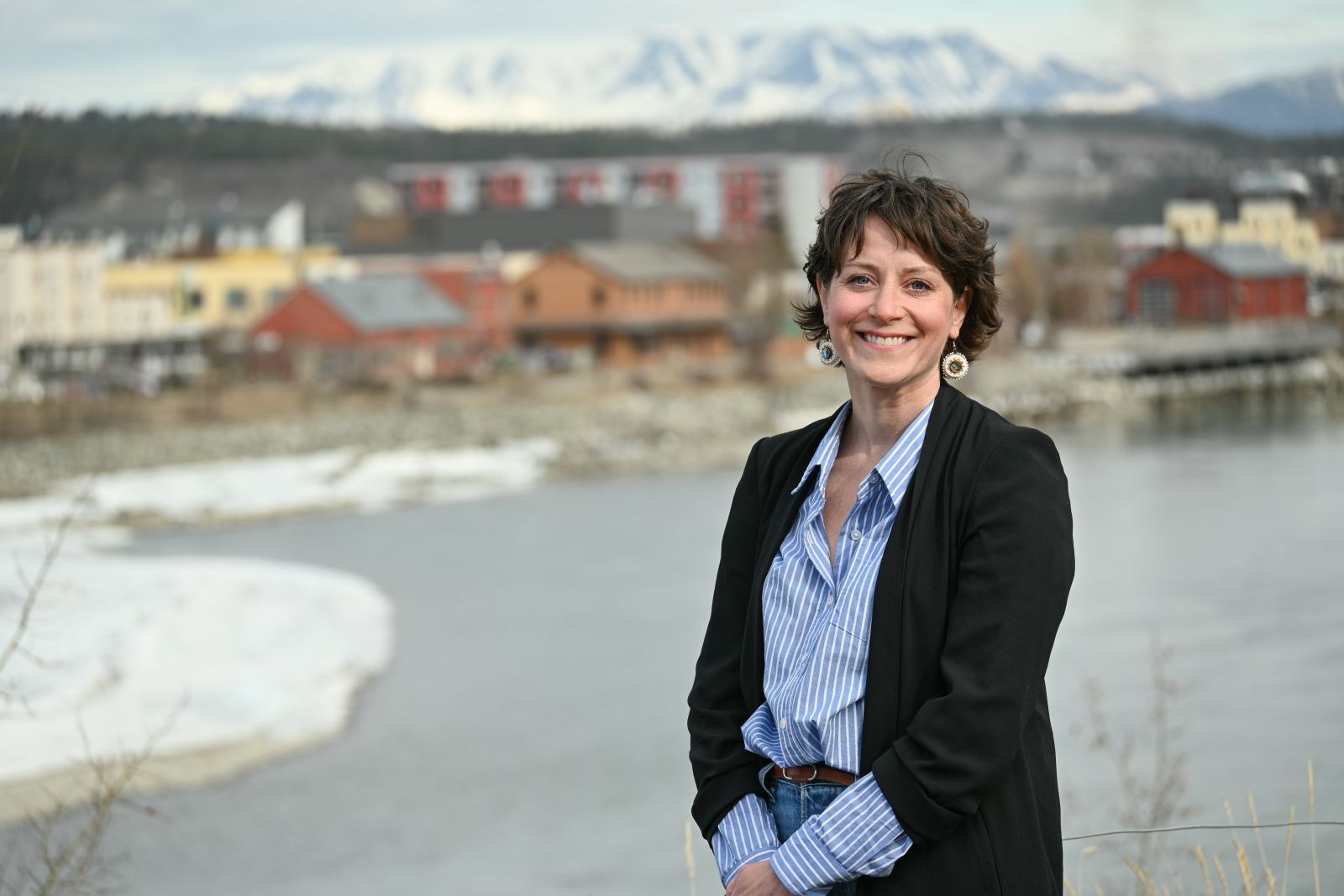
Ashley never set out to become a nurse. She began studying kinesiology because she had a lifelong interest in sports and how the human body works.
But after completing her degree, she found herself searching for a direction. A chance conversation at a swimming pool introduced her to accelerated nursing programs and led to a major change in her path.
With a strong science background, Ashley enrolled in the University of Toronto’s 2‑year Bachelor of Nursing program. Her clinical placements showed her different areas of nursing, including a rural placement at Whitehorse General Hospital.
What she initially saw as a 1‑year adventure has become an 11‑year career in the Yukon.
"Yukon is a place where you can have a meaningful impact, both professionally and personally," she says.
"Our healthcare teams are dedicated, skilled, and committed to each other as much as we are to the people we care for. There's a strong sense of community; it's what keeps many of us here."

Ashley started her nursing career on the surgical unit at Whitehorse General. She later worked in outpatient oncology and other hospital units. She was unsure about trying a management role, but after 6 months she surprised herself and realized she enjoyed it.
Ashley had discovered a passion for understanding health care from a systems perspective. That curiosity led her to continue her education. She completed master’s‑level training in health care leadership and advanced oncology, then went on to earn a Nurse Practitioner degree.
Ashley became a Nurse Practitioner in November and now works as the Manager of Cancer Screening Programs, focusing on program planning and development. While she does not work directly with patients, she uses her advanced training in policy, leadership, project planning and system design every day.
Ashley describes her motivation as “stubborn curiosity.” She wants to understand how health care works and how it can be made better. She believes the system needs more clinicians who understand both leadership and day‑to‑day practice, so decisions are based on real experience. Nurses are well suited for this work because they know the front line and how the system is built.
She says the challenge is that nurses are often pushed to choose between patient care and leadership. The reward is moving past that choice, helping nurses work to their full skills and building systems that better support both patients and health care providers.
Ashley started her nursing career on the surgical unit at Whitehorse General. She later worked in outpatient oncology and other hospital units. She was unsure about trying a management role, but after 6 months she surprised herself and realized she enjoyed it.
Ashley had discovered a passion for understanding health care from a systems perspective. That curiosity led her to continue her education. She completed master’s‑level training in health care leadership and advanced oncology, then went on to earn a Nurse Practitioner degree.

Ashley became a Nurse Practitioner in November and now works as the Manager of Cancer Screening Programs, focusing on program planning and development. While she does not work directly with patients, she uses her advanced training in policy, leadership, project planning and system design every day.
Ashley describes her motivation as “stubborn curiosity.” She wants to understand how health care works and how it can be made better. She believes the system needs more clinicians who understand both leadership and day‑to‑day practice, so decisions are based on real experience. Nurses are well suited for this work because they know the front line and how the system is built.
She says the challenge is that nurses are often pushed to choose between patient care and leadership. The reward is moving past that choice, helping nurses work to their full skills and building systems that better support both patients and health care providers.