

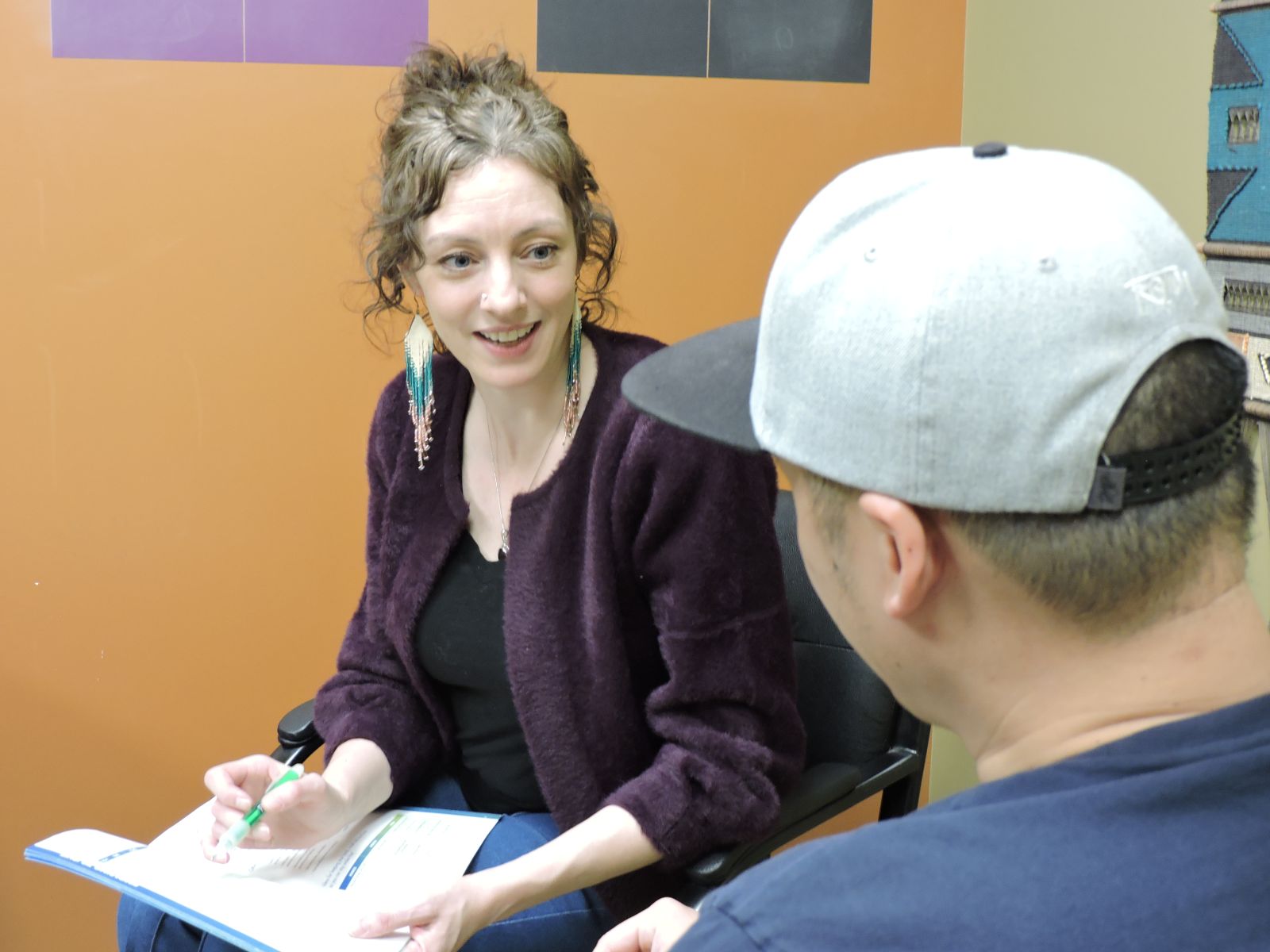
Emily is a Yukoner who helps people quit smoking, vaping and chewing tobacco.
Her official title is Health Promotion Coordinator, but many people know her as a “quit coach.”She coordinates Quitpath, a service that helps Yukoners quit or cut back on commercial tobacco and nicotine use.
The work combines public health initiatives with one-to-one support.
What does it mean to be a quit coach? Let’s meet Emily and find out.
Could you introduce yourself?
I'm Emily, I was born and raised in the Yukon. I work with the Government of Yukon as a Health Promotion Coordinator. I'm also a ‘quit coach’ with Quitpath. It’s a program for people looking to quit or reduce smoking, vaping or other commercial tobacco use.
How did you get into this career?
I started with a degree in nutrition and first worked in public health in Whitehorse, supporting dietitians. While working with the Health Promotion Unit, I moved into youth tobacco-use prevention. Over time, that led to the career I have today.
I've now worked in the Health Promotion Unit for 17 years, including about 6 years with Quitpath.
I work one-to-one with clients to help them quit or reduce commercial tobacco use or vaping.
What do you mean by “commercial” tobacco use?
I use that term to differentiate smoking, vaping, and chewing tobacco from traditional and ceremonial uses of tobacco we see in the Yukon, such as tobacco offerings or smudging.
What is Quitpath?
Quitpath is the Yukon's only program specifically supporting people who want to quit or reduce smoking, vaping nicotine or other commercial tobacco use.
We offer coaching, strategies, tools and encouragement, as well as free nicotine replacement products for those who want them. People can choose the level of support that works for them.
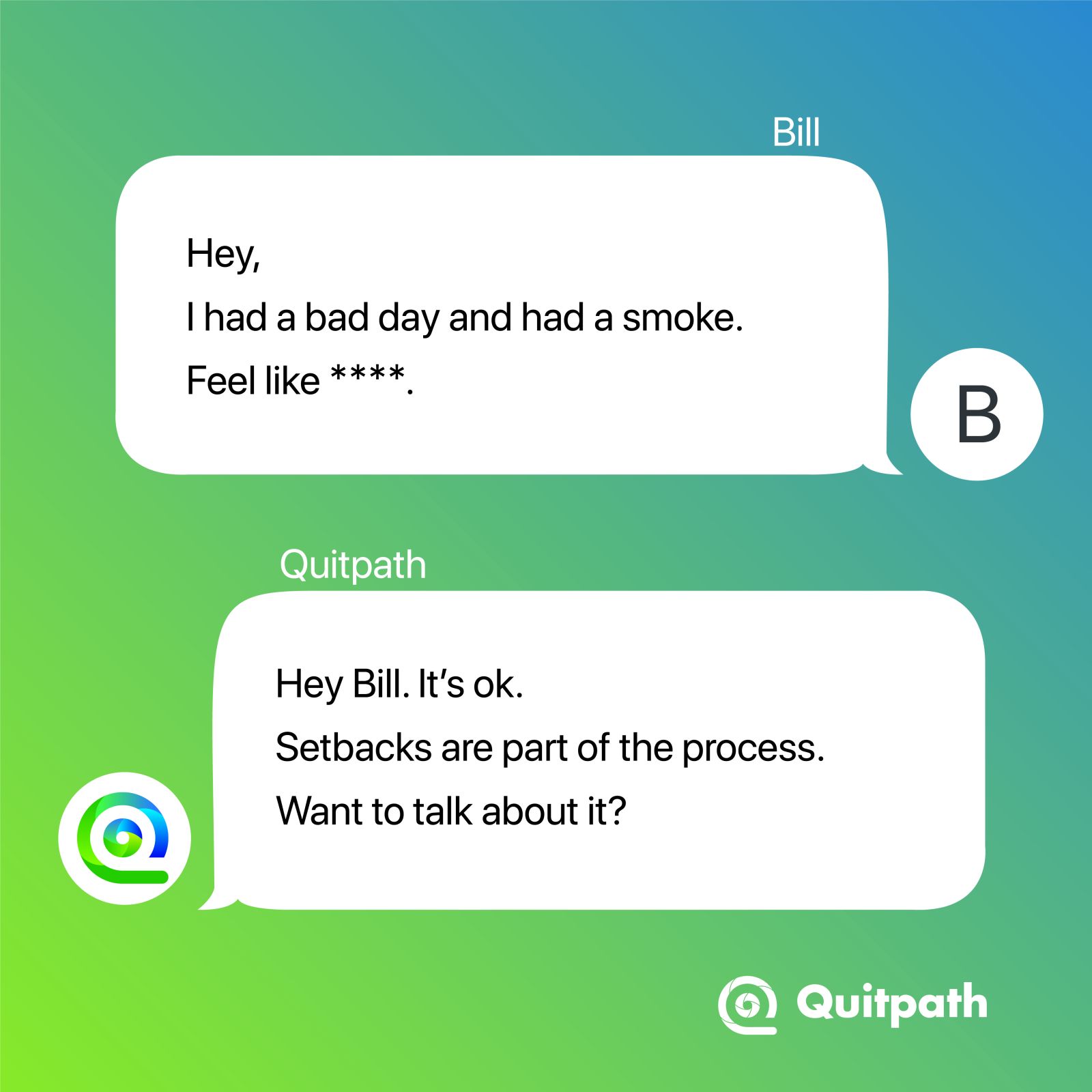
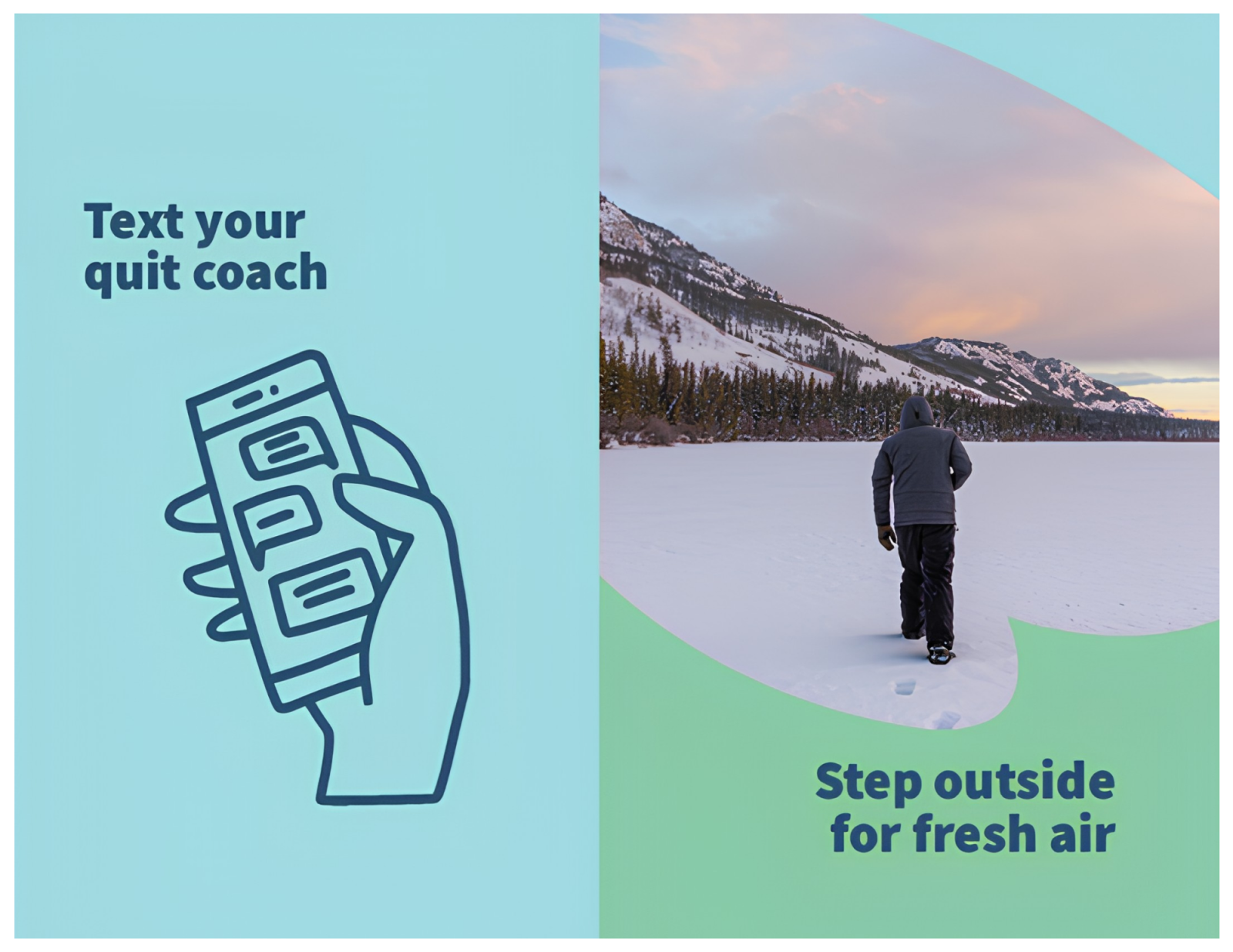
I work directly with clients. I have a whole list of folks I'm texting, calling or meeting in person. I'm checking in and asking, “what's going well? Where are the challenges?”
I follow along with folks on their quit journey.
The work is very person-centred. My biggest passion is dispelling stigma and shame, especially for people who smoke. We want to provide a safe, nonjudgmental space where people feel heard and understood and have a renewed sense of hope.
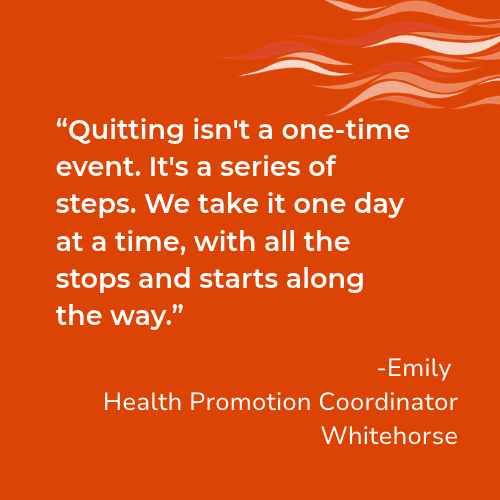
Quitting isn't a one-time event. It's a series of steps. We take it one day at a time, with all the stops and starts along the way.

Who do you work with?
Quitpath is a very small team of 2 or 3 people. I say that because our team includes part-time casual staff.
I also want to thank our partners. We work with 19 partners, including health clinics and centres across the Yukon. People can access Quitpath directly through their health centre, through us or through a combination of both. In Whitehorse, 4 clinics also offer our nicotine replacement supplies.
We're a small team based in Whitehorse, but our partnerships help us reach more people across the Yukon.
What do you like about your work?
It's definitely the connection with people. I work in this unique window where I'm not a counsellor, I’m a quit coach, but I am there to make a connection with people.
We're there to support people when they're making a huge change. That's the best part of my job: helping people recognize their own strengths, build their courage and journeying alongside them.
What is unique about working in the Yukon?
You know, when you're small, on the one hand, there are a lot of challenges! But it also offers the benefit of flexibility and the ability to respond to client feedback.
Would you have any advice for someone considering this career?
If you have an interest in working with and supporting people, there are a lot of fields where you can do that: counseling or psychology, nursing, social work and support work.
This is another option that offers that same kind of connection. You can help people overcome a very difficult dependency or addiction.
Definitely think about it! It’s a great role.
Could you share a success story?
I've worked with people who smoked 50 cigarettes a day when they first came to see me. You could see it on their faces and hear it in their voices. Quitting felt like climbing Mount Everest.
I think of 2 people in particular. We worked together slowly, talked things through, built their confidence and took steps forward. We also found the right quit aids for them.
Finding the right products and strengths and having support to use them can make or break someone's success.
In both cases, we worked together for a year and a half and they are both completely smoke-free!
These 2 people initially thought they might only be able to cut down a bit.
I want to say that being smoke-free isn’t the only success.
I also work with people who quit and then quit again and again. That is also success! It’s even more than that. It’s how they learn and often you’ll start to see quit attempts getting closer and closer together.
Each quit is an opportunity for a person to learn what helps and what doesn’t. As one client said, “never quit quitting!” One day, you’ll get there.